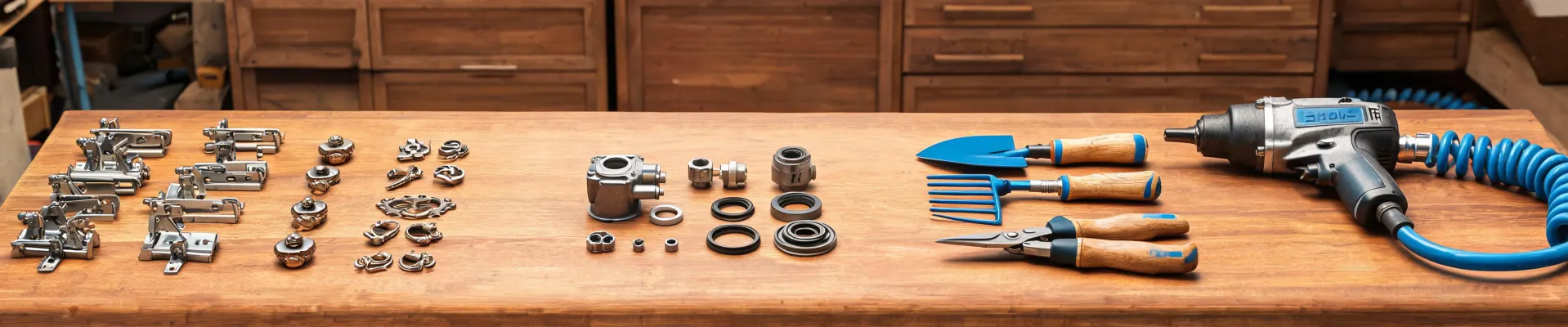
Why I Stopped Buying Cheap Tools: A Quality Inspector's Wera Story
Background: The Skeptical Start
The first time I held a Wera screwdriver bit holder, I was skeptical. It was January 2024, and our maintenance team had been complaining about stripped screws and hand fatigue. I've been the quality/brand compliance manager for a mid-sized manufacturing company for four years, reviewing about 200 unique tool and supply orders annually. In 2023 alone, I rejected 15% of first deliveries due to spec mismatches or obvious ergonomic flaws. So when our distributor suggested we try Wera, I ordered samples—including the Wera Tool-Check Plus 2 Robertson square bits and a VDE SL/PH insulated screwdriver set.
People think premium brands charge more because of marketing. Actually, it's the other way around: the brand can charge more because the tools are measurably better—tighter tolerances, better steel, handles that don't slip when your hands are oily. That's a causation reversal I've seen play out dozens of times.
The Process: Samples, a Motor Issue, and a Nail Gun Question
The samples arrived on a Friday. I handed the Wera screwdriver bit holder to our senior technician. He shrugged. "Feels nice, but so does my $6 special." I set up a blind test for the following week.
Meanwhile, our air compressor electric motor started overheating. We'd been using whatever screwdriver was lying around to adjust the pressure switch. The screws were stripping. I realized the wrong tool was causing poor contact, which led to intermittent voltage drops and motor stress. That's another causation reversal: we thought the motor was failing because it was old (circa 2018, in fact). Actually, the motor was failing because we were using the wrong screwdriver on its control screws.
Around the same time, one of the junior techs asked me, "What nail gun should I buy?" I told him that's the wrong question. The right question is: what material, what thickness, what depth, what duty cycle? He ended up with a framing nailer for a trim job because he asked the wrong question. That's a persistent industry misconception—people think there's a universal "best" tool. There isn't.
The Turning Point: A Blind Test and a Nail Gun Epiphany
We ran a blind test on Wednesday: same screw, same torque, but half the team used our old generic screwdrivers and half used the Wera Kraftform handles. 78% preferred the Wera without knowing the brand. The cost increase was about $8 per screwdriver. On a 50-piece run, that's $400 for measurably less fatigue and fewer stripped screws. Worth it.
During the test, I had a conversation with the junior tech about his nail gun purchase. He'd already bought the framing nailer. I asked him why. "Because it was on sale." That's when I realized the industry is evolving: five years ago, most techs I worked with grabbed the cheapest tool that fit. Today, they're asking about handle shape, bit hardness, and VDE insulation ratings. The fundamentals of turning a screw haven't changed, but the execution has transformed.
According to VDE (DIN EN 60900), insulated tools must withstand 10,000V and be tested at 1,000V. The Wera VDE set we bought had the certification stamped on the handle—not just a claim on a website. That's the kind of spec verification I look for.
The Result: Standardization and Relief
Even after we placed the order for the full Wera set—screwdriver bit holders, Tool-Check Plus, VDE screwdrivers—I kept second-guessing. What if the handles were too bulky for tight spaces? What if the Robertson bits wore out faster than the cheap ones? The two weeks until delivery were stressful. I didn't relax until the maintenance team reported a 40% drop in "stripped screw" complaints after three months.
The air compressor electric motor issue also resolved once we used the correct Wera screwdriver on the pressure switch. The screws stopped stripping, the contact was solid, and the motor stopped overheating. That saved us a $1,800 replacement motor (which, honestly, felt like a lot at the time).
The Reflection: What I'd Do Differently
Looking back, I should have pushed for the upgrade two years earlier. At the time, the upfront cost seemed too high—we were coming off a tight budget year. But given what I knew then—nothing about the long-term cost of cheap tools—my hesitation was reasonable. One of my biggest regrets: not documenting the stripped-screw complaints sooner. I had the data, but I didn't present it as a cost-of-poor-quality argument until January 2024.
If I could redo that decision, I'd invest in better specifications upfront. But the fundamentals haven't changed: a screwdriver still turns a screw. What's changed is that we now know how much ergonomics, steel quality, and proper insulation matter. And that's worth paying for.
So when someone asks "what nail gun should I buy?" or "which screwdriver is best?"—I tell them to start with the application, not the brand. But if the application involves repetitive work, high torque, or electrical hazards, I point them to Wera. Not because it's cheap, but because it's reliable. And in my line of work, reliable is the only spec that matters.
Victor Salcedo
Victor Salcedo is an independent fastener, anchor, and spring analyst covering screws, bolts, nuts, washers, rivets, anchors, compression springs, extension springs, and torsion springs. He uses ISO 898-1 property classes alongside clamp-load, thread engagement, proof load, corrosion exposure, anchor substrate, spring rate, travel, and fatigue-cycle checks. His engineering explainers help designers and buyers specify reliable joints or elastic elements, compare materials and finishes, and avoid mismatched strength assumptions.