Little Giant Pump Procurement FAQ: Check Valves, Impellers, and Spare Parts
-
Little Giant Pumps and Parts: Procurement FAQ
-
What should I check before adding Little Giant products to our approved vendor list?
-
Is a Little Giant pump check valve worth specifying, or is any check valve fine?
-
What is an impeller in a centrifugal pump, and why does it matter for purchasing?
-
Do we need a 270 piece tool set and strap wrench replacement strap in our pump maintenance kit?
-
How do I evaluate reliable, durable pump claims without getting fooled by marketing?
-
What is the most common procurement mistake with pump orders?
-
What warranty and returns questions should I ask before a bulk pump order?
-
When should I not buy a Little Giant pump for a job?
-
What should I check before adding Little Giant products to our approved vendor list?
I’m an office administrator for a 120-person facilities services company. I manage MRO ordering—roughly $180,000 annually across 11 vendors—and report to both operations and finance. When I took over purchasing in 2021, I treated pumps as a catalog item. I don’t anymore. Here are the questions I actually ask before approving Little Giant products, check valves, impellers, and the maintenance tools that go with them.
Little Giant Pumps and Parts: Procurement FAQ
What should I check before adding Little Giant products to our approved vendor list?
I start with three boring things: authorized distributor status, invoice and warranty documentation, and replacement-part availability. In 2024, during our vendor consolidation, I had to combine orders for 3 locations. The vendor that looked cheapest could not provide a proper invoice for a mixed pump-and-parts order; finance rejected it and I ate a $600 rework cost. Now I verify invoicing before price. For Little Giant products, I also ask whether the distributor stocks common parts or only full units. Per FTC advertising guidance (ftc.gov), performance claims should be truthful and substantiated, so I keep the published spec sheet with the quote. I’m not a pump engineer, so I don’t approve an application from a catalog page alone. I ask operations for the actual duty: voltage, discharge size, fluid, and duty cycle. If the quote cannot answer those, it is not a procurement-ready quote.
Is a Little Giant pump check valve worth specifying, or is any check valve fine?
A check valve is not glamorous until it fails. It stops backflow and keeps a pump from short-cycling. I used to think any check valve with the right pipe size was fine. I only believed the opposite after ignoring material and orientation on a condensate job; the valve worked at first, then nuisance cycling started. For a Little Giant pump check valve, I confirm the pump model, discharge line size, material compatibility, and whether the installer needs vertical or horizontal orientation. I also ask if the valve is serviceable. To be fair, a cheap valve can be fine in a low-duty application—though I should note we now avoid unverified no-name valves on anything tied to a warranty claim. I don’t size check valves myself. I get the installer or engineer to confirm cracking pressure and flow direction.
What is an impeller in a centrifugal pump, and why does it matter for purchasing?
The impeller is the rotating part that moves fluid in a centrifugal pump. Its diameter, material, and clearance affect flow and head. For procurement, the practical question is not the textbook definition; it is whether the replacement impeller matches the model and operating conditions. I wish I had tracked impeller part numbers more carefully from the start. What I can say anecdotally is that one wrong part number cost us a week and a second freight charge. When a new buyer asks what is impeller in centrifugal pump, I keep it simple: it is the engine-side of hydraulic performance, so don’t substitute by appearance. I’m not a hydraulic engineer, so I don’t pick an impeller trim for a duty point. I ask for the pump curve and the OEM part number. That boundary has saved more money than any negotiated discount.
Do we need a 270 piece tool set and strap wrench replacement strap in our pump maintenance kit?
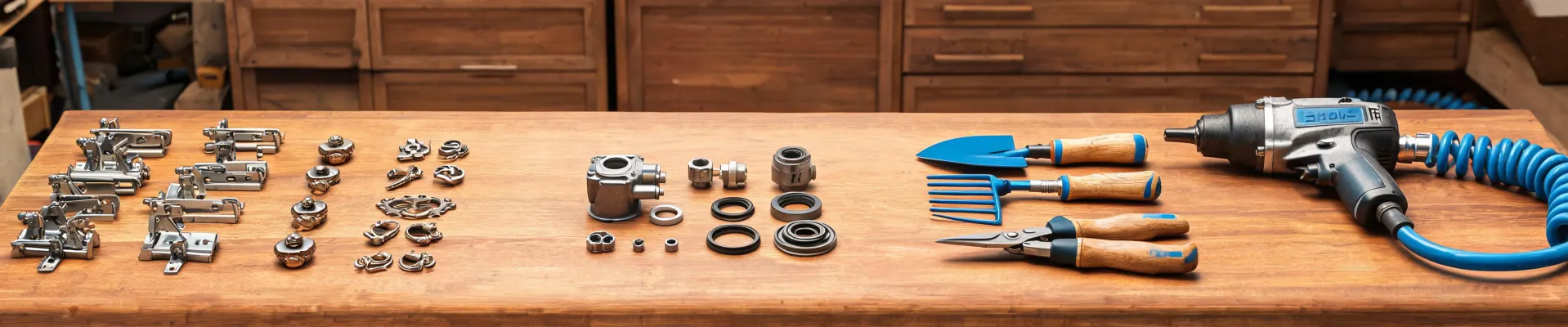
Not automatically. This is where bulk purchasing gets sloppy. A 270 piece tool set looks efficient on a PO, but if technicians already carry their own tools, it becomes shelf weight. The strap wrench replacement strap is the opposite: small, specific, and annoying when missing. We keep one strap wrench and a spare strap for filter housings and pump service, but I don’t stock a full tool set at every site. I don’t have hard data on how often those straps fail, but based on our 2023 maintenance tickets, the strap was a one-off replacement, not a monthly item. If I remember correctly, the spare was under $25, though I might be misremembering. My rule: buy the 270 piece tool set only for a dedicated shop or a new maintenance van. Buy the replacement strap with the wrench.
How do I evaluate reliable, durable pump claims without getting fooled by marketing?
I don’t accept reliable as a standalone word. I ask for the warranty term, what voids it, typical service life in a comparable application, and whether the distributor stocks parts. I also ask what the pump is not good for. A supplier who says, this isn’t our strength—here’s who does it better earns trust for everything else. That said, I get why sales teams lean on durable; it is easy to say. My experience with 60–80 orders annually suggests the quote with the clearest exclusions is usually the safer buy. I’m not 100% sure that holds in every category, but it has held for pumps and parts. For Little Giant products, I keep the spec sheet, warranty document, and distributor contact in the vendor file. If a claim is vague, I treat it as unverified, not as a reason to reject the vendor outright.
What is the most common procurement mistake with pump orders?
Treating the pump as a commodity. The pump is one line; the system around it is the order. I made that mistake in 2022 when I had two hours to release a replacement order before a site visit. Normally I’d get multiple quotes and confirm the discharge and voltage, but there was no time. I went with our usual vendor on trust. The pump arrived correct, but the check valve and fittings did not match the existing line. Looking back, I should have paid for expedited shipping on the right parts instead of rushing the wrong bundle. Now I require a five-line checklist before approval: model, voltage, discharge, fluid, and spare-parts availability. It feels slow for small orders. It is faster than a second trip.
What warranty and returns questions should I ask before a bulk pump order?
I ask four things: warranty length, what voids coverage, who pays return freight, and whether the distributor stocks replacement parts or only full units. In 2024, during our vendor consolidation, I had to combine orders for three locations. One supplier offered a lower unit price but a 15% restocking fee and no written warranty summary. I passed. The higher quote included a clean warranty document and a parts list. That was worth more than the discount. To be fair, restocking fees are real when buyers order the wrong model. But I need them in writing before the PO, not after. I don’t have hard data on how often pump returns are avoidable, but my sense is most start with a missing model or voltage check. My rule is simple: if the quote cannot show the warranty and return terms on one page, it is not ready for a bulk order.
When should I not buy a Little Giant pump for a job?
When the application falls outside the published performance range, or when the installation involves hazardous location, unusual fluid, or a duty point nobody can document. This gets into pump engineering territory, which isn’t my expertise. I’d recommend consulting the installer or a qualified engineer before finalizing. That is not a knock on Little Giant; it is how procurement should work. A good supplier will tell you what they do not stock or what needs a factory lead time. I’d rather work with a specialist who knows their limits than a generalist who overpromises. For standard condensate, sump, sewage, pond, pool-cover, and utility pump replacements, I’m comfortable qualifying Little Giant products through an authorized distributor. For anything that needs a stamped submittal or a custom curve, I step back and let the technical team own the decision.

Koji Sakamoto
Koji Sakamoto is an independent pneumatic tool and compressor analyst covering air compressors, impact wrenches, air ratchets, nail guns, and general air-tool systems. He applies ISO 11148 safety requirements while evaluating working pressure, free-air delivery, air consumption, hose loss, duty cycle, fastener capacity, vibration, noise, lubrication, and moisture control. His application guides help workshops and contractors size air supplies, compare tool output, and prevent performance losses caused by undersized or poorly maintained systems.