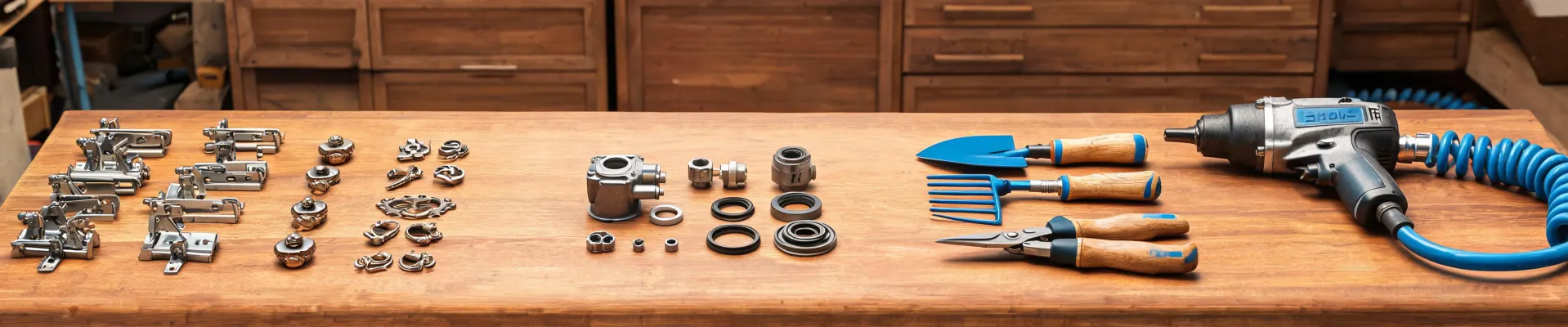
Emergency Valve Repairs: Which of These 3 Scenarios Are You In?
-
There's no universal emergency valve fix
-
Scenario A: A failed ball valve needs an exact replacement—fast
-
Scenario B: You have a live leak and need to stabilize it before the replacement arrives
-
Scenario C: The failure is in your compressed air system, not the water line
-
How to tell which scenario you're actually in
-
Bottom line
There's no universal emergency valve fix
Over the past four years coordinating emergency orders for a valve distributor, I've handled more than 300 rush requests. The one thing I've learned: the right answer depends entirely on which failure you're facing. A leaking ball valve on a potable water line is a completely different problem from a compressed air system that won't hold pressure. Treating them the same way wastes time—and time is the one thing you don't have.
So instead of a single checklist, here's how I triage these calls. Three scenarios, three different playbooks. Figure out which one matches your situation before you order anything.
Quick note: some of this was true in 2020 but isn't anymore. Supply chains and technical documentation have changed. I'll flag those spots as we go.
Scenario A: A failed ball valve needs an exact replacement—fast
This is the most frequent call I get. A 2-piece ball valve starts weeping from the stem or body joint, and the maintenance team needs a drop-in replacement. If you're working with Apollo valves, the 70-145-E5 2-piece ball valve is a common culprit (and replacement) in commercial plumbing and light industrial systems. I'm not 100% sure it's the most common failure point industry-wide, but it's the one I see most often on emergency calls.
Here's what actually matters when you're sourcing this under pressure:
1. Verify the exact model and pressure class. The 70-145-E5 designation encodes the size and connection type, but you should always confirm the seat material separately. Pull the spec sheet from the Apollo Valves website rather than guessing from memory. I've seen a team order the right size but the wrong seat material, which meant the valve failed hydro testing on arrival. That mistake cost them 36 hours.
2. Confirm the pressure rating on the body. Many 2-piece ball valves in this class are rated 600 WOG (water, oil, gas), but don't assume. Check the stamping. If your system runs above that, you need a different valve, not a faster shipping option.
3. Don't default to 'local is faster.' This was true in 2010 when most distributors kept full local stock. Today, a well-organized regional distributor with real-time inventory visibility can often beat a local branch that has to transfer stock from another location. The key is whether they can confirm stock in real time—not whether they're within driving distance.
In March 2024, a facilities team called at 4:30 PM on a Thursday needing an Apollo 70-145-E5 replacement for a Friday morning inspection. Their local supplier had it listed as 'in stock' but couldn't physically locate the unit. We found a distributor two states away with confirmed inventory, paid $85 in expedited freight, and had it on site by 9 AM. The alternative was postponing the inspection—which would have triggered a $12,000 contract penalty.
That's the trade-off in Scenario A: pay for certainty, not just speed.
Scenario B: You have a live leak and need to stabilize it before the replacement arrives
Sometimes you can't wait for the right part. The valve is leaking now, the system can't be shut down cleanly, and you need to buy time. This is where improvisation matters—but improvisation with the right tools.
For temporary clamping and adjusting on small-to-medium pipe fittings, the Cobra water pump pliers XS 87 00 100 are worth having in your emergency kit. The 100mm size fits into tight spaces where standard pliers won't reach, and the self-locking jaw design means you can apply steady pressure without holding the tool constantly. I keep a pair in my go-bag. It's not a permanent fix—nothing is—but it can hold a slow weep long enough to get the system to a controlled shutdown.
While you're stabilizing the leak, you'll likely need to adjust or remove fasteners on nearby equipment. That's where hex key sizing becomes a bottleneck. Grab the wrong size and you'll round the socket head, turning a 10-minute adjustment into a 2-hour extraction job.
How to measure a hex key correctly: Use calipers to measure across the flats (the distance between two opposing flat sides of the hex shaft), not corner-to-corner. A 3mm hex key measures 3mm across the flats. If you're working in inches, a 1/8" hex key measures 0.125" across the flats. Don't eyeball it—the difference between 5mm and 5/16" (7.94mm) is obvious, but the difference between 5mm and 3/16" (4.76mm) is not, and both will almost fit.
I learned that the hard way in 2023. Said 'standard 5mm' to a junior tech over the phone. He heard 'standard SAE' and grabbed a 3/16". Result: a stripped set screw and an extra hour of drilling. We now keep a printed conversion chart taped inside the toolbox lid.
Scenario C: The failure is in your compressed air system, not the water line
This one trips people up because the symptoms look similar—pressure loss, audible leak, system shutdown—but the fix is different. An air compressor valve operates under different conditions than a water valve: higher cycling rates, oil carryover, and often higher temperatures at the discharge.
If your compressor isn't holding pressure, in my experience it's one of three components: the check valve, the safety relief valve, or the pilot valve on the unloader. Before you order a replacement, confirm which one is actually failing. I've seen teams replace a $200 safety valve when the real issue was a $40 check valve that wasn't seating properly.
One more thing: don't assume a valve rated for water service will work in an air system. The seals and materials are often different. A standard brass ball valve might work temporarily, but it's not designed for the cycling and oil exposure. Use a valve rated for compressed air service—check the manufacturer's spec for pressure and temperature limits, and verify the seal material is compatible with your lubricant.
Also, if the compressor is down and you're sourcing a replacement valve, ask the supplier for the flow coefficient (Cv) and pressure drop data. A valve that's the right size but wrong Cv will cause the compressor to short-cycle, which leads to bigger problems down the road.
How to tell which scenario you're actually in
Here's the decision logic I use on the phone:
- Is the leak on a potable water or process line with a failed isolation valve? → Scenario A. You need an exact replacement. Prioritize model verification over shipping speed.
- Is the leak active and you can't isolate the system yet? → Scenario B. Stabilize first, source second. Have the right hand tools ready.
- Is the problem pressure loss in a compressed air system? → Scenario C. Diagnose the specific component before ordering.
If you're not sure, start with the isolation question. If you can shut off the system safely, you have time to verify the part. If you can't, you're in stabilization mode whether you like it or not.
The old rule of thumb was 'always keep a spare on the shelf.' That still works for critical isolation valves, but for everything else, the modern supply chain—with real-time inventory visibility and next-day freight—has made carrying every possible spare less necessary. What hasn't changed is the need to know your system specifications before you pick up the phone.
Bottom line
Emergency valve work isn't about having one perfect answer. It's about correctly identifying which problem you're solving. A ball valve replacement, a temporary leak fix, and a compressed air valve failure each demand a different approach—and confusing them is how small problems become expensive ones.
Check the model. Verify the pressure rating. Measure your hex keys properly. And when you call for a rush order, have the spec sheet in front of you. That's what separates a 24-hour fix from a 72-hour nightmare.

Leila Farzan
Leila Farzan is an independent welding, abrasives, and cutting accessories analyst covering welders, electrodes, wire, grinding wheels, flap discs, cutting discs, drill bits, saw blades, hole saws, and router bits. She references ISO 525 abrasive-product dimensions and ISO 9606-1 welding qualification concepts while examining wheel speed, grit, bond, electrode class, duty cycle, kerf, tooth geometry, and material compatibility. Her guides help fabricators choose consumables, control process risk, and compare cut or weld quality.