Repair vs. Replace in Plano, TX: A Cost Controller's TCO Comparison for Sump Pumps, Garage Doors, Jeep Service, and Tools
Why I Compare Repair vs. Replace Before I Sign Anything
I'm a procurement manager at a 45-person commercial property services company in Plano. I manage about $180,000 a year in maintenance and tooling spend. Over the past 6 years, I've negotiated with 20+ vendors and tracked every invoice in our cost system. When I audited our 2023 spending, I found that 31% of our budget overruns came from choosing the lower upfront quote on repair work. Not the higher quote. The lower one.
That sounds backwards, I know. But the pattern was consistent: cheap repair, callback, downtime, redo. So now I run every repair-or-replace decision through a TCO comparison. Total cost of ownership, not sticker price. The framework is simple: upfront cost, downtime cost, hidden fees, and risk-of-redo cost. I'll compare four common Plano decisions: sump pumps, garage doors, Jeep service, and tools like kids tool sets and electrical pliers.
1. Sump Pump: Repair vs. Replace
The question I get most: 'Do I need to replace my sump pump?'
My answer depends on age, failure count, and water risk. In Q1 2025 I pulled 14 sump pump work orders from our Plano properties. Repair quotes ranged from $180 to $350. Replacement quotes ranged from $450 to $900, including disposal. On paper, repair wins almost every time. That's the data. My gut says otherwise when the pump is over 8 years old.
Upfront cost: Repair is cheaper. A float switch or check valve replacement is usually under $250. A full replacement is $500+.
Downtime cost: This is where repair loses. If a repaired pump fails during a storm, you're looking at water remediation. One of our vendors charged $1,200 for a basement cleanup after a failed repair. That single event ate the savings from three replacements.
Hidden fees: Replacement often includes permit and disposal. Repair may not. Ask. I got burned in 2022 when a $220 repair turned into $390 after after-hours and haul-away fees.
Risk of redo: If the pump has failed twice in 12 months, replace it. The TCO math flips. I chose replacement for a 9-year-old pump in 2024 even though the numbers said repair. I kept second-guessing until the next heavy rain passed and the basement stayed dry. That was stressful, but it was the right call.
2. Garage Doors Plano: Repair vs. Replace
For garage doors plano facilities, the decision usually splits into springs/opener vs. full door. A spring replacement is a repair. A rusted, sagging 18-year-old door is a replacement.
Upfront cost: Spring repair: $250-$450. Opener repair: $150-$300. New door: $1,200-$3,500 installed, depending on size and insulation. If I remember correctly, our last commercial door replacement was around $2,800—or rather, closer to $3,100 once disposal was added. I might be misremembering the exact figure.
Downtime cost: A broken spring can shut down a loading bay. If you have a business that depends on that door, downtime is the real cost. A $300 repair that takes 3 days for parts can cost more than a $1,500 replacement that happens tomorrow.
Hidden fees: Disposal, permit, and after-hours labor. Also, some cheap spring repairs void the door manufacturer's warranty. That's a TCO killer.
Counterintuitive conclusion: The cheaper repair can be the more expensive choice if it voids a warranty or leaves the door out of balance. I'd argue that for doors over 15 years old with two or more panel issues, replacement usually wins on TCO.
3. Jeep Repair and Service in Plano TX: Dealer vs. Independent Shop
For jeep repair and service in plano tx, I compare dealer service vs. independent shop for our small fleet. The dealer is not always more expensive. That surprised me.
Upfront cost: Independent shops often have lower labor rates. Dealer rates are higher. But for recalls, software updates, and warranty work, the dealer may be free or fixed-price.
Downtime cost: Dealer may have longer wait times. Independent shop may get you in faster. But if the independent shop lacks the right diagnostic tool, you pay for guesswork. I had one shop spend 4 hours on a Jeep issue that the dealer diagnosed in 45 minutes.
Hidden fees: Diagnostic fees. Some shops waive them if you approve the repair. Some don't. Always ask.
Risk of redo: For routine oil changes and brakes, independent is fine. For electrical gremlins or transmission work, dealer or a Jeep specialist may have lower TCO because they fix it once. My gut said go independent for everything. The data said split the work. I now split it.
4. Tools: Kids Tool Set and Electrical Pliers
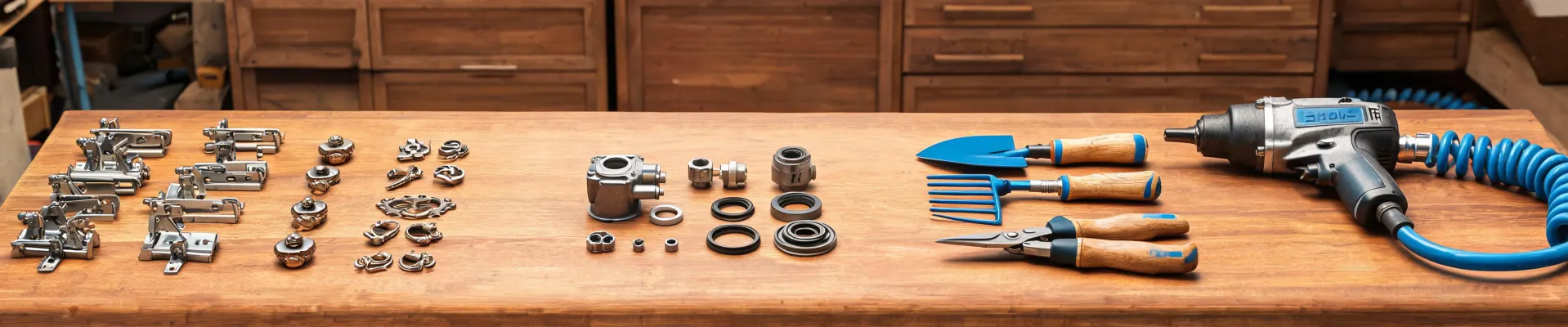
This is where my role gets practical. I buy tools for our team, and I also get asked about kids tool set recommendations and electrical pliers for apprentices.
Kids Tool Set: Toy vs. Real
Upfront cost: A toy set is $20-$40. A real starter set with small hand tools is $50-$100. The toy set is cheaper.
Downtime cost: A toy set doesn't teach real torque or safety. If your goal is to keep a 4-year-old busy, toy wins. If your goal is to build skills for a 10-year-old, real tools win.
Hidden fees: Cheap tools break. Broken tools get replaced. That's the hidden cost.
TCO conclusion: For ages 5-8, buy the toy set. For ages 10+, buy a real kids tool set with safety glasses and a small clamp. It lasts longer and teaches more.
Electrical Pliers: Cheap vs. Insulated
Upfront cost: Cheap pliers: $10-$20. Insulated, 1000V-rated pliers: $35-$70. The cheap pair looks like a bargain.
Downtime cost: Cheap pliers slip, strip screws, and cut poorly. That costs time. Insulated pliers protect against shock. That's not a feature you want to test.
Risk of redo: A cheap tool that fails on a live circuit can cause injury or a redo. I'm not 100% sure how often cheap pliers fail in the field, but I know our safety policy now requires insulated electrical pliers for any electrical work. That policy came after a near-miss in 2023. The TCO of the cheap pair was way higher than the $45 we saved.
My TCO Comparison Rule
Here's the rule I use: lowest quote rarely equals lowest cost. I add up upfront price, downtime, hidden fees, and risk of redo. Then I compare that total against the next option.
Per FTC advertising guidelines (ftc.gov), claims must be truthful, not misleading, and substantiated with evidence. That's a good filter for any vendor who says 'lifetime warranty' or 'guaranteed fix' without showing the terms.
I also use a 3-quote minimum. Our procurement policy now requires quotes from 3 vendors because two quotes can both be wrong in the same way. I built a simple cost calculator after getting burned on hidden fees twice. It takes 10 minutes to fill out. It has saved us thousands.
Honestly, I'm not sure why some vendors consistently beat their quoted timelines while others consistently miss. My best guess is internal buffer practices. But I can measure the outcome, and I can put it in the TCO sheet.
So, do you repair or replace? It depends on the scenario:
- Sump pump: Repair if under 5 years and first failure. Replace if over 8 years or second failure. Answering 'do I need to replace my sump pump?' starts with age and failure count.
- Garage doors: Repair springs or opener if the door is under 10 years and panels are solid. Replace if over 15 years with rust, sag, or repeated spring failures.
- Jeep repair and service in Plano TX: Independent shop for routine maintenance. Dealer or Jeep specialist for recalls, software, and complex electrical.
- Kids tool set: Toy for young kids. Real starter tools for older kids who want to learn.
- Electrical pliers: Buy insulated, rated pliers. The $20 savings is not worth the risk.
In my opinion, the best procurement move is not to find the cheapest option. It's to find the option with the fewest surprises. That's TCO thinking. And in Plano, where storms, garage doors, and fleet vehicles all compete for the same budget, it's the only way I've found to keep the numbers from lying to me. If you're gonna remember one thing from this, make it this: the lowest quote rarely equals the lowest cost.

Koji Sakamoto
Koji Sakamoto is an independent pneumatic tool and compressor analyst covering air compressors, impact wrenches, air ratchets, nail guns, and general air-tool systems. He applies ISO 11148 safety requirements while evaluating working pressure, free-air delivery, air consumption, hose loss, duty cycle, fastener capacity, vibration, noise, lubrication, and moisture control. His application guides help workshops and contractors size air supplies, compare tool output, and prevent performance losses caused by undersized or poorly maintained systems.