I Sourced Custom Parts From Six Manufacturers. Here's What I'd Do Differently.
How Sourcing Custom Parts Landed on My Desk
I'm the office administrator for a 120-person equipment company. Officially, I manage roughly $380,000 in annual purchasing across about a dozen vendors. Unofficially, I'm the person everyone dumps problems on when they don't know who else to ask.
Last spring, our operations manager walked into my office, dropped a folder on my desk, and said, "We need these outsourced by Q3." Then he walked out.
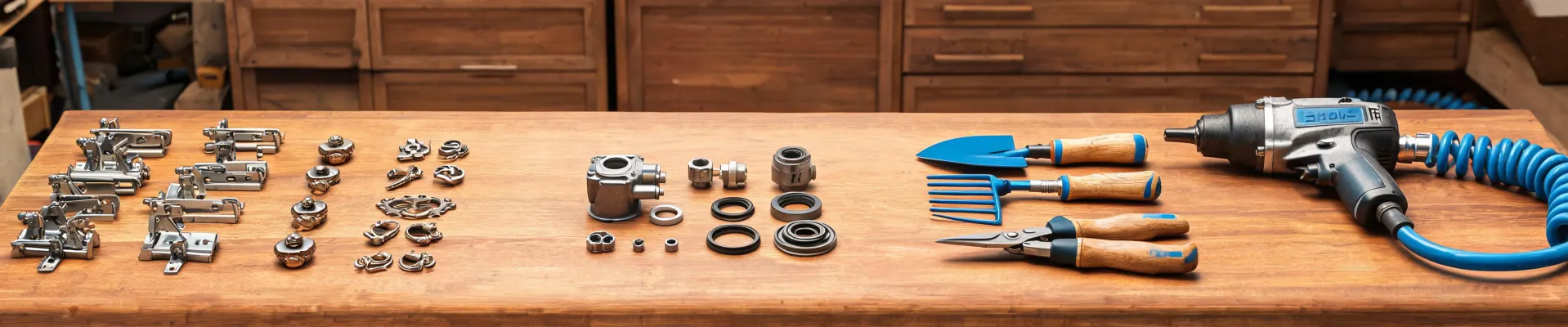
Inside were drawings for six components: two injection molded housings, a set of precision CNC machined parts, several high volume custom metal stamping components, and—the one that would give me the most headaches—a batch of extension spring hooks.
I'd been managing vendors for five years by that point. But I'd never sourced precision manufacturing. I figured it would work like any other purchase: get a few quotes, compare them, pick the best one. I was wrong about that in ways I couldn't have predicted.
The Cheap Quote That Cost Us a Month
The first plastic injection molding manufacturers I reached out to looked solid. ISO 9001 certified, decades of experience, pricing that seemed reasonable. I sent the same drawings and specs to three of them and waited.
Two weeks later, the quotes came back. That's when things got confusing.
One quote was 40% higher on tooling than another. Same part. Same material. Same volume. I assumed somebody had made a mistake, so I called the cheaper vendor and asked why.
"Oh, we interpreted the tolerances as nominal," the rep told me. "The other shop probably read them as hard specs."
I didn't know what that meant. So I looked it up. That's how I learned about ISO 2768, the general tolerance standard. It defines default tolerances by class—fine, medium, coarse—and if your drawing doesn't specify which class you're using, manufacturers fill in the blank with their own assumptions.
I'd never thought to ask. Simple oversight. Costly one.
We went with the mid-priced vendor. Less hassle on their end. Fewer surprises on ours.
When "Precision" Means Different Things to Different People
Finding a CNC precision machining company was the opposite problem. Too many options, and no clear way to tell them apart.
I got seven quotes for the precision CNC machined parts. Three were within 5% of each other. The rest were outliers in both directions—one suspiciously low, two suspiciously high.
Here's what I didn't expect: the cheapest quote came from a shop that never asked a single question. Not one. They just quoted the part and sent it over. When I followed up with a technical question about surface finish, I waited three days for a two-sentence answer.
The mid-priced shop called me back within an hour. They asked about our assembly process, whether we needed secondary operations, and what our annual volumes looked like. I told them we weren't sure yet. They said that was fine—they'd quote both a low-volume and high-volume price so we could plan.
I didn't give them the order that time. Their quote was higher. But I remembered them.
Everything I'd read about sourcing said to prioritize price and lead time. In practice, for our situation, the shop that asked the most questions was the one that eventually earned our business. The silence from the cheap shop wasn't confidence. It was disengagement.
The Metal Stamping Vendor That Wouldn't Listen
The high volume custom metal stamping order is where things really went sideways.
We needed precision metal stamping parts for a bracket assembly—nothing exotic, just consistent. Volumes were high enough that tooling costs amortized well, so I assumed any competent stamper could handle it. I sent the spec to four vendors and picked one based on price and a reference from a colleague.
First article came back three weeks late. And it was wrong. Not "slightly off" wrong—the bend radius was visibly different from the drawing.
I called the vendor. Their response still bothers me.
"Well, that's how we'd normally bend it."
As if the drawing was a suggestion.
I'm not sure why some vendors treat specifications as negotiable. My best guess is that it comes down to volume—when you run thousands of parts a day, each individual job feels small. But "small to them" isn't small to us. The late first article pushed our assembly line back two weeks. My operations manager didn't yell. He didn't have to. The look was enough.
I don't have a foolproof way to screen for this. What I've started doing is asking a pointed question before placing any order: "If our spec conflicts with your standard process, what happens?" The answer tells you a lot. Vendors who say "we'd call you" pass. Vendors who say "we'd adjust it to standard" don't.
Where It Finally Came Together
After three months of juggling six different suppliers, a colleague suggested I look into consolidating. That's how I found plano.
I was skeptical. Using one supplier for injection molding, CNC machining, stamping, and springs felt like asking too much from a single company. But their technical support is what sold me. An engineer went through our drawings line by line and flagged three tolerance callouts that would've caused problems down the line. Two of them matched issues we'd already hit with other vendors.
The extension spring hooks were the last piece of the puzzle. We'd had two suppliers fail on them—one on dimension, one on delivery. Spring hooks fall in the "fairly standard" category, so I wasn't expecting much. But plano's team asked about our loading cycles, then came back with a slightly different material spec that would last longer. Pricier per unit. Cheaper over the life of the assembly.
I wouldn't have known to ask for that. And honestly, I wouldn't have known it was possible.
One more thing: consolidating six vendors down to one also cleaned up my invoicing mess. Two of my previous suppliers didn't offer electronic invoicing. One still sent handwritten receipts. My accounting team had been flagging those for months. Going to a single purchase order per quarter fixed that in about ten minutes.
What I'd Do Differently
If I could redo this project, I'd change three things.
First, I'd ask every vendor how they interpret tolerances before they quote. If they can't answer clearly, that's your answer. Second, I'd run a small test order before committing to volume. It's annoying. It's also cheaper than rework. And third, I'd stop treating "more vendors" as "more safety." Six suppliers meant six invoice cycles, six lead times to chase, six relationships to manage. One good supplier would've replaced most of that.
The lesson I keep coming back to: sourcing custom parts isn't really about price. It's about predictability. A vendor that hits the spec on time at a fair price beats a vendor that's 10% cheaper and 50% less reliable. Every single time.
I'd rather spend an hour on the front end explaining our requirements than three months cleaning up the back end. An informed supplier asks better questions and makes faster decisions. And honestly? So does an informed buyer.
Rajiv Menon
Rajiv Menon is an independent rigging and lifting hardware analyst covering shackles, chain hoists, hooks, turnbuckles, wire-rope clips, and lifting attachments. He applies ISO 2415:2022 shackle requirements while evaluating working load limit, grade, proof load, design factor, pin fit, sling angle, reeving, brake behavior, identification, inspection, and temperature range. His safety-led guides help lifting teams and purchasers select compatible hardware, interpret markings, establish inspection criteria, and avoid side loading or undocumented substitutions.